

This is the second instalment of our three-part retrospective on the 2025 summer transfer window. Across the series, we are returning to the judgments we made before the season and testing them against what actually followed.
In Part 1, we revisited Arsenal, Brighton, Aston Villa and Leicester City. This time, the focus shifts to Chelsea, Manchester United, Tottenham Hotspur and West Ham United.
The same questions remain: did the arrivals strengthen the first team, replace what departed and address the club’s most important needs?
The results also reinforce an important distinction. A club can recruit good players and still have a weaker season. Equally, a small transfer class can prove transformative when those players are given the right roles, resources and tactical environment.
Part 2 at a glance
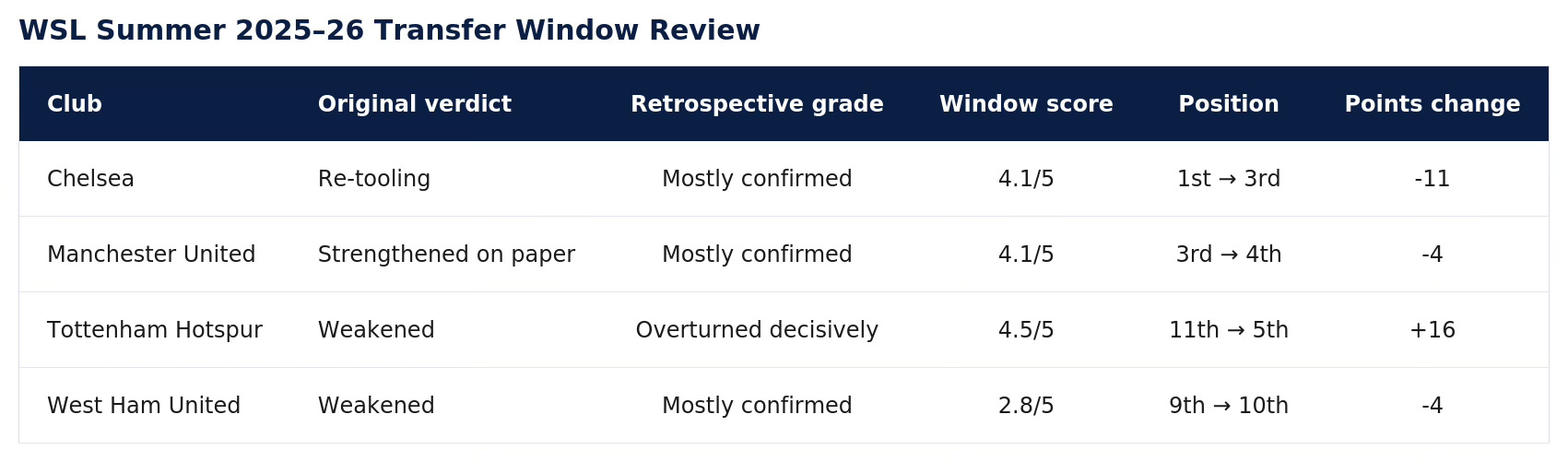
Chelsea — good recruitment, weaker season
Our original verdict: Re-tooling
Retrospective grade: Mostly confirmed
Window score: 4.1/5
Our argument at the time was that Chelsea had lost experience and some depth without requiring a complete rebuild. Ellie Carpenter represented the major first-team addition and appeared capable of replacing Ashley Lawrence on the right. Livia Peng, Mara Alber and Rebecca Spencer added different forms of depth, although the overall squad looked slightly slimmer than usual.
At the time of publication, Alyssa Thompson’s deadline-day signing had not yet been announced, so she was not factored into our original analysis or verdict. However, because this retrospective assesses the completed window and its overall impact, Thompson is included in the evaluation.
One season later, the recruitment worked better than the team did.
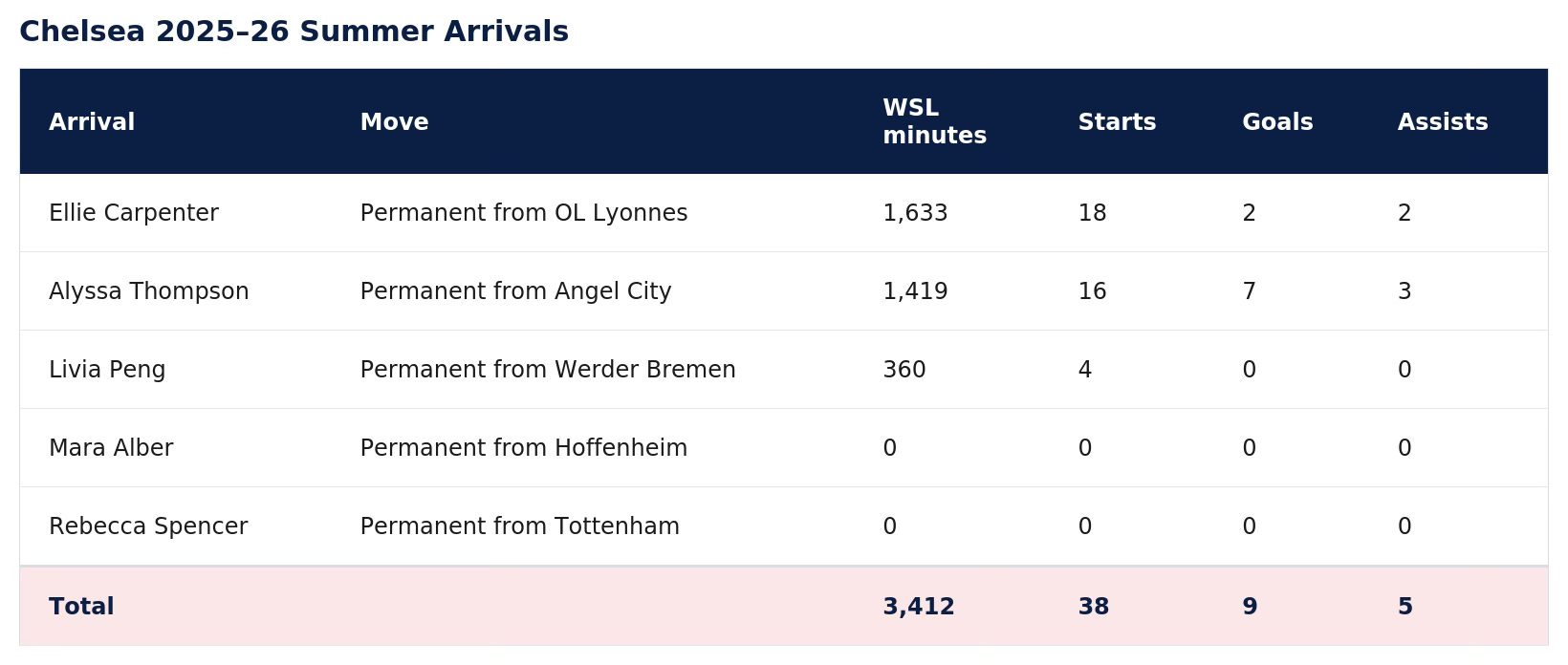
Carpenter became a first-choice player as expected, while deadline-day signing Alyssa Thompson transformed the completed window. Thompson scored seven league goals, supplied three assists and finished with more WSL goal involvements than any other Chelsea player. Peng provided usable goalkeeping cover, but Alber and Spencer did not play in the league. Altogether, the five arrivals produced 3,412 minutes, 38 starts, nine goals and five assists.
Chelsea re-tooled successfully—but lost their title
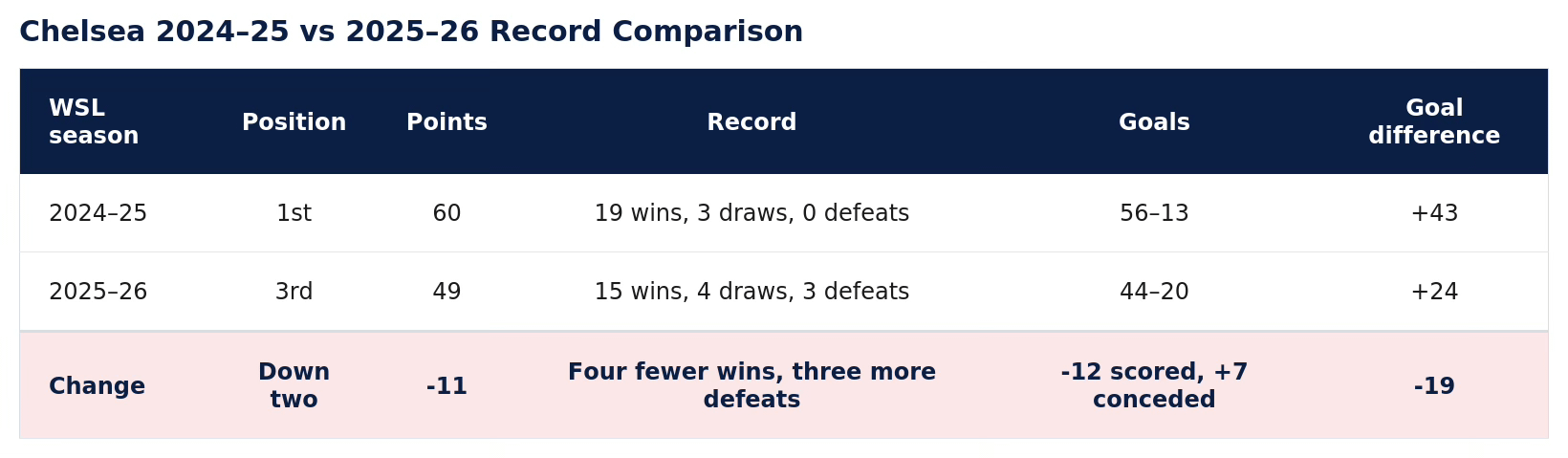
The new arrivals were not the main reason Chelsea’s results worsened. Carpenter and Thompson were among the team’s strongest performers, while Carpenter effectively replaced Lawrence at right-back. However, their contributions were not enough to prevent a broader decline, as Chelsea finished with 11 fewer points, scored 12 fewer goals and conceded seven more than in the previous season. Their run of six consecutive WSL titles ended as they dropped from first to third.
Our final verdict:
Chelsea’s summer recruitment worked: Carpenter and Thompson strengthened the first team, but those successful additions did not preserve the club’s title-winning standard.
Manchester United — the signings delivered, but the squad still fell short
Our original verdict: Strengthened on paper
Retrospective grade: Mostly confirmed
Window score: 4/5
Our verdict at the time was based on the experience and quality of Julia Zigiotti Olme and Fridolina Rolfö. Both had played at Champions League level and appeared capable of raising United’s ceiling immediately. The primary concern was whether such a small incoming group provided enough depth for a team entering the Champions League proper for the first time.
At the time we published our original analysis, the deadline-day swap involving Jess Park and Grace Clinton had not yet taken place, so neither move informed our verdict. Because this retrospective assesses the completed window, Park’s arrival and Clinton’s departure are included below.
One season later, all three summer arrivals proved to be meaningful contributors.
Zigiotti Olme established herself in midfield, while Rolfö supplied experience, versatility and four league goal involvements. The decisive arrival was Park. She scored six goals, provided five assists, earned a Player of the Season nomination and was selected in the WSL Team of the Year. Together, the three arrivals produced 4,076 minutes, 47 starts, 11 goals and eight assists.
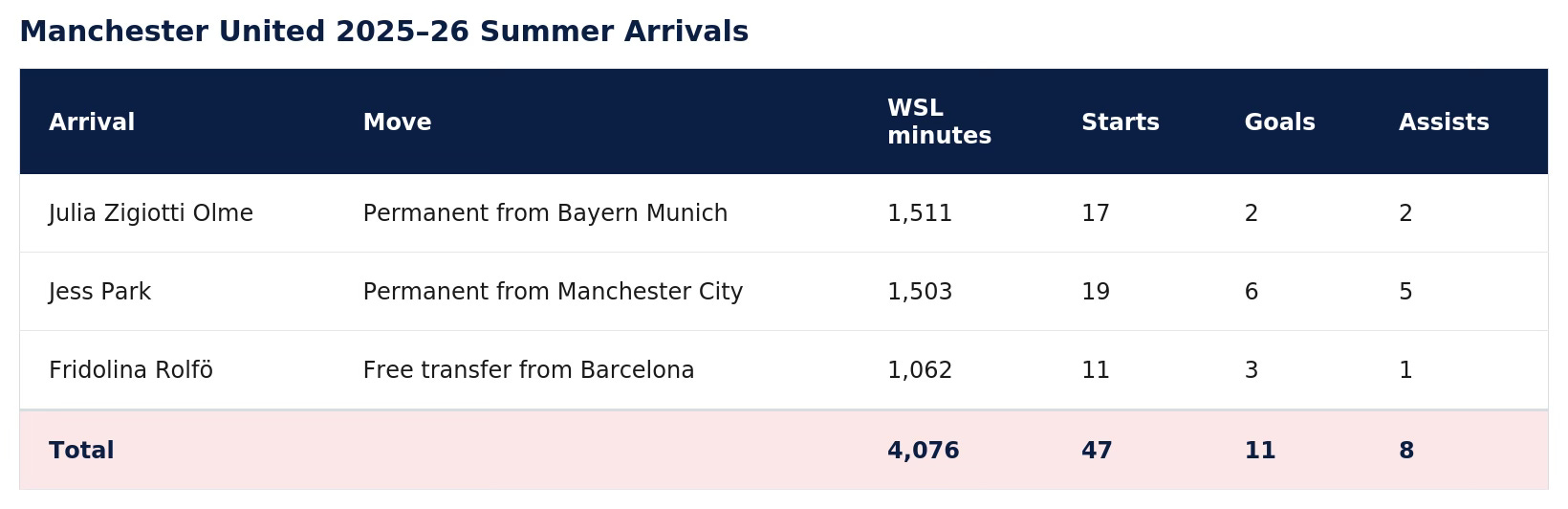
United strengthened, but Champions League football stretched the squad
Park immediately replaced Clinton’s attacking output, while Zigiotti Olme and Rolfö adapted quickly. Collectively, however, United fell from third to fourth, scored three fewer goals and conceded six more. The arrivals strengthened the team, but the wider squad was not equipped for the additional demands of Champions League football. United performed impressively in Europe, reaching the quarter-finals in their first appearance in the competition proper, while also reaching the League Cup final. The demands of the expanded schedule eventually told: they ended the campaign with only one victory from their final ten matches in all competitions.
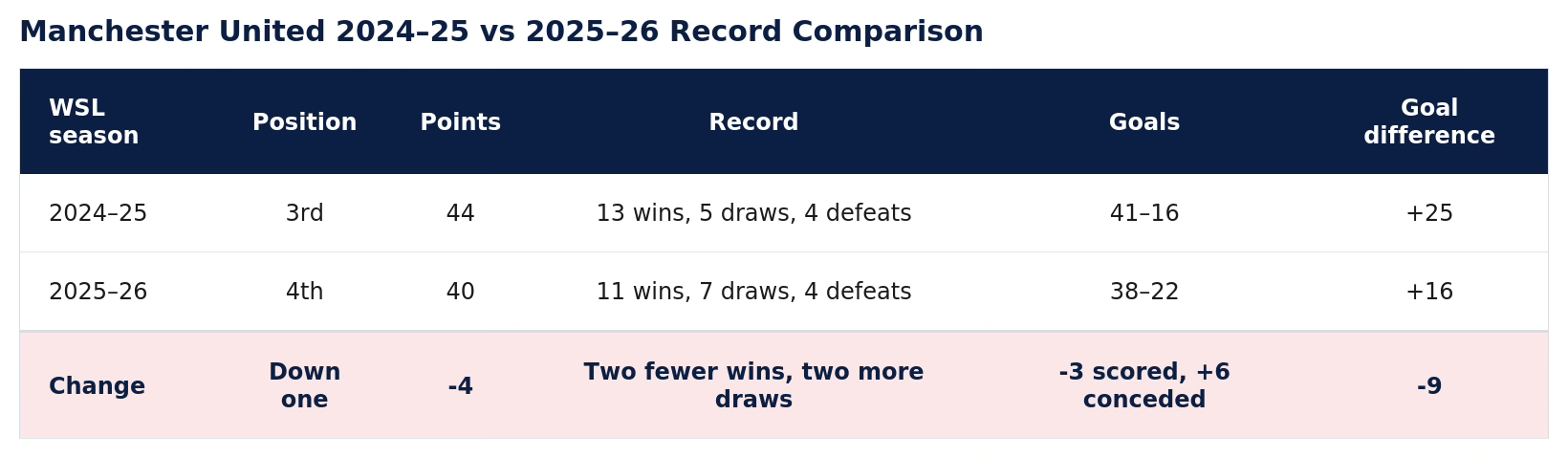
Our final verdict:
Manchester United recruited three strong first-team players, but the small summer class did not provide enough depth to maintain their previous league position alongside European competition.
Tottenham Hotspur — our original verdict was decisively wrong
Our original verdict: Weakened
Retrospective grade: Overturned decisively
Window score: 4.5/5
Our assessment at the time was that Tottenham had sacrificed experience for very limited proven potential. Toko Koga was the only arrival recorded at publication, while Rosella Ayane and Rebecca Spencer had departed. With no previous WSL minutes, Koga was treated as a talented but uncertain development signing. We concluded that Spurs would be weaker unless she adapted quickly or further business followed.
At the time of publication, Cathinka Tandberg’s deadline-day signing had not yet been announced, so she was not included in our original analysis or verdict. However, that omission alone does not explain why we were wrong. Under our grading criteria, Tandberg would probably have been placed in the same category as Koga: a talented player without WSL experience whose immediate impact remained uncertain. Even if her signing had been announced, our verdict would likely have remained unchanged.
One season later, Koga and Tandberg decisively overturned both our verdict and the assumptions behind it.
Koga became a first-choice centre-back, started 19 league matches and was selected in the WSL Team of the Season. She also won Tottenham’s Adults Supporters’ Player of the Season award. Tandberg provided the attacking reinforcement that had appeared to be missing, scoring six goals and supplying two assists. Together, the two arrivals produced 2,864 minutes, 32 starts, eight goals and three assists.
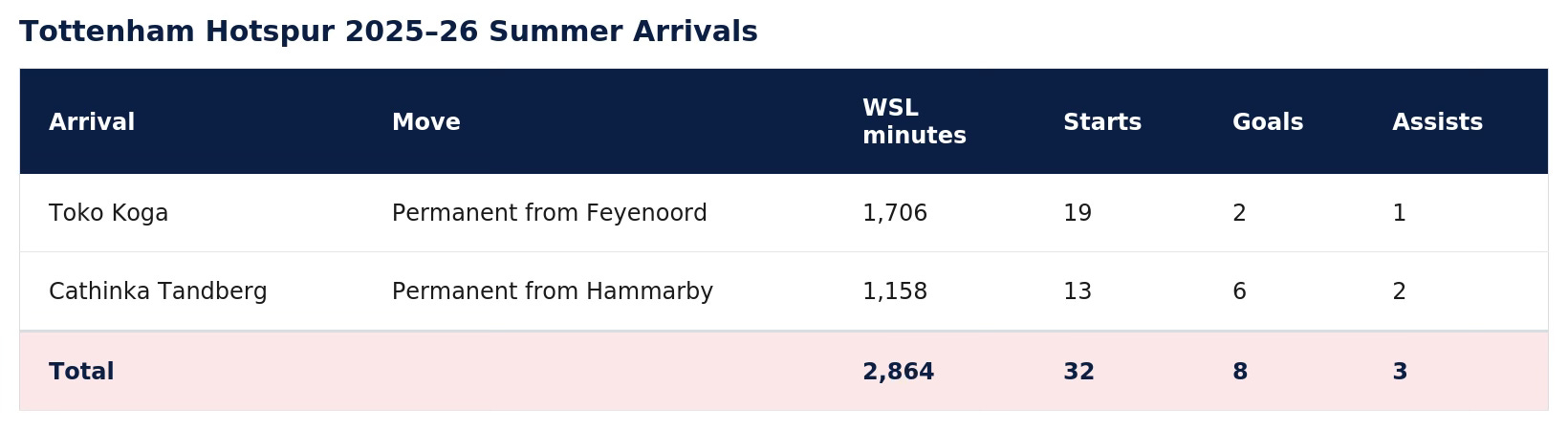
Tottenham strengthened at both ends
Spurs rose six places, added 16 points and improved their goal difference by 15. They set a new club WSL record with 36 points and finished fifth, equalling their best finish in the competition. Koga provided defensive stability, while Tandberg gave the attack a reliable central threat. Martin Ho’s appointment and five January arrivals were also important, so the improvement cannot be credited solely to the two summer signings. Even so, both were unambiguous first-season successes.
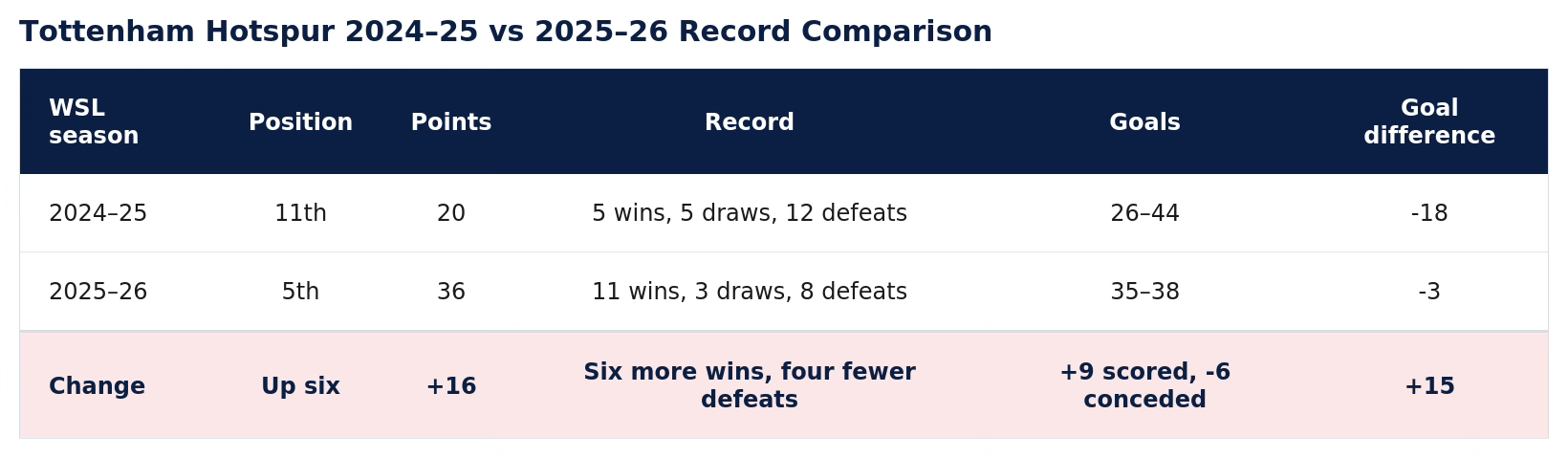
Our final verdict:
Tottenham’s summer recruitment was outstanding: Koga became one of the league’s best defenders and Tandberg supplied the goals the publication-time squad appeared to lack.
West Ham United — the warning held, but the reasoning was too blunt
Our original verdict: Weakened
Retrospective grade: Mostly confirmed
Window score: 2.8/5
Our argument at the time was that West Ham had lost too much WSL experience and replaced it with younger, less proven players. The departures of Kirsty Smith, Dagný Brynjarsdóttir, Emma Harries and Shannon Cooke reduced the squad’s senior depth, while the incoming group appeared unlikely to replace that experience immediately.
One season later, West Ham were weaker—but the arrivals were more useful than we anticipated.
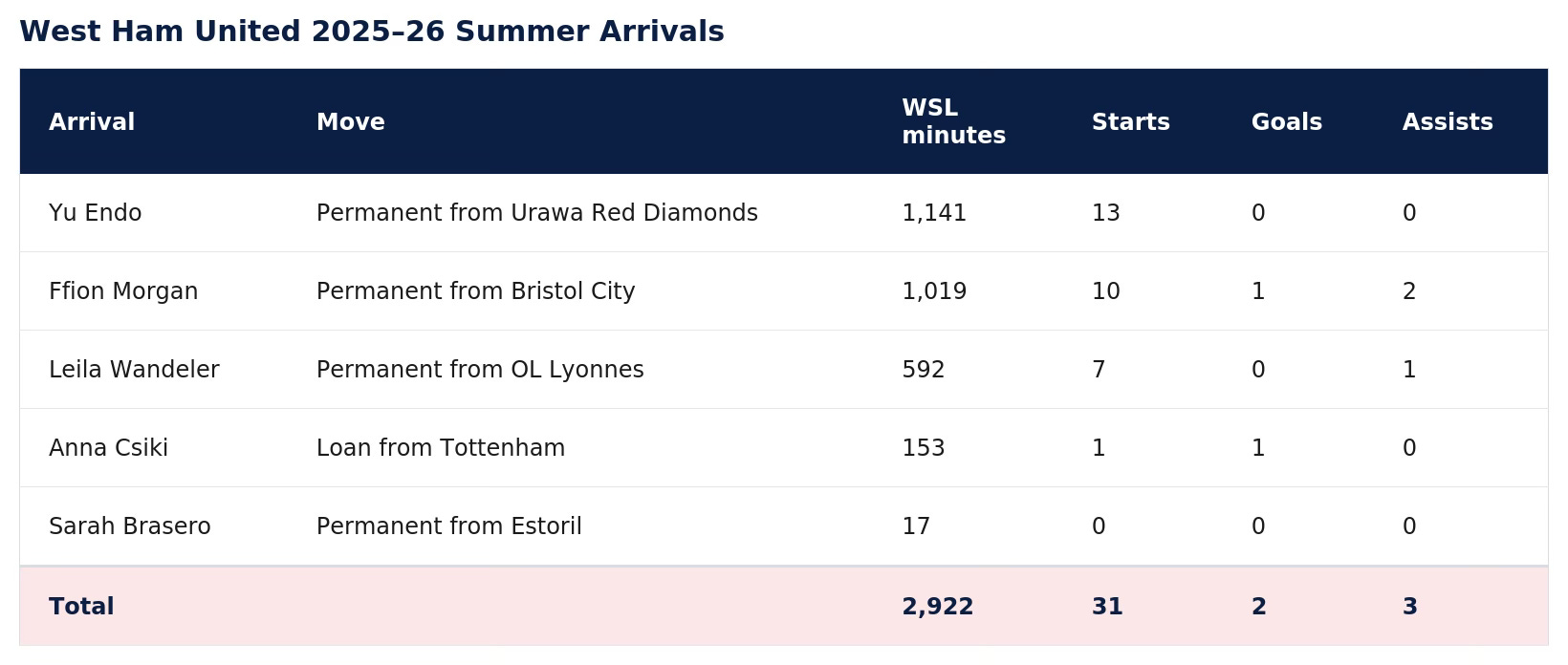
Ffion Morgan and Yu Endo became regular contributors, while Leila Wandeler earned a rotational role and was named Young Hammer of the Year. Sarah Brasero remained a development player, and Anna Csiki’s deadline-day loan ended in January. The five summer arrivals produced 2,922 minutes and 31 starts, but only two goals and three assists. They replaced much of the departed players’ playing time, but not their leadership or influence.
West Ham’s attacking decline confirmed the short-term risk
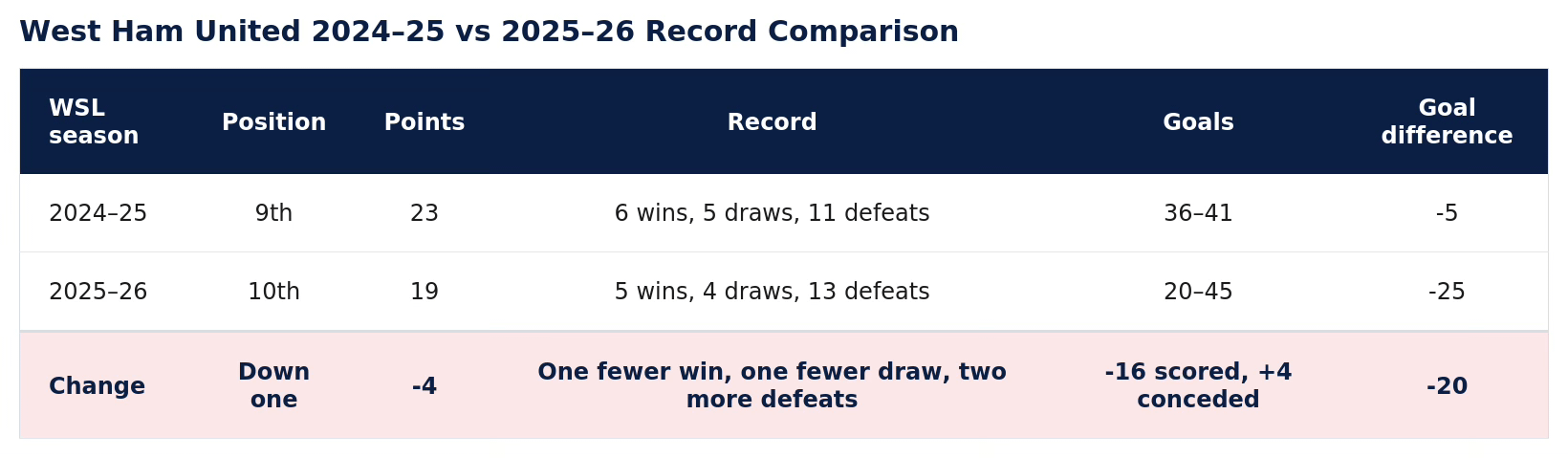
West Ham fell only one place, but the decline behind that movement was severe. They collected four fewer points, conceded four more goals and scored 16 fewer. Rehanne Skinner departed after the team managed one victory and five points from its opening 11 matches. Rita Guarino and five January additions helped West Ham recover, but the need for such substantial mid-season intervention supported our original warning that the summer squad was too vulnerable.
Our final verdict:
West Ham’s window produced two useful regulars and some longer-term potential, but it did not add enough immediate quality to prevent a significant first-team decline.
The overall verdict on Part 2
Three of our four original judgments broadly survived.
Chelsea re-tooled successfully, Manchester United added quality without solving their depth problem, and West Ham were weakened in the short term. Tottenham were the clear exception.
Once again, the review exposed the limits of our original framework. Previous WSL minutes alone could not capture experience gained in other strong leagues, while first-choice signings, rotation players, academy recruits and goalkeepers required different expectations.
Coming in Part 3
Part 3 will complete the retrospective by revisiting four more clubs:
Everton: Did their recruitment provide the improvement the squad required?
Liverpool: Did their transfer business leave them stronger or expose deeper problems?
London City Lionesses: Did an ambitious first WSL window produce enough immediate quality?
Manchester City: Did their additions build a title-winning squad?
Really love this series - I'm trying to catch up on a lot of your other pieces too in my free time. Genuinely love the work you're doing.
How do you plan on considering how the January transfer window impacted each team's season? Just wondered if you plan on writing about this, too.
Great stuff either way!